








RAM Shortages, High DDR5 Memory Prices, and Scalpers
Today I listed a single 16GB Samsung DDR5 SO-DIMM laptop RAM stick (Lenovo OEM module) on eBay.
It sold in about five minutes.
I priced it at $95.95 Buy It Now (eBay claimed these were selling for around $80), thinking I’d probably have to walk it down over time. Nope. Instant purchase. That’s not a “normal used laptop RAM eBay selling experience”—that’s a market that’s either genuinely tight, full of aggressive resellers, or both.
This post is my quick anecdote + the bigger macro story behind why memory prices are getting weird—and why that can spill into the prices (or specs) of laptops, phones, and other electronics.
I purchased the replacement RAM “on sale” from newegg.com just a few weeks ago for $260 (as of Dec 2025, the pair of modules are now selling for $320).
The 5-minute sale: what it probably means (and what it doesn’t)
A super fast sale can mean you underpriced it. It can also mean:
- A reseller has saved searches + instant alerts and buys anything under a threshold.
- A buyer had a dead stick and needed a replacement right now.
- Your listing hit the “just listed” visibility bump and someone grabbed it immediately.
So yes, I might have left money on the table. But “sold fast” doesn’t automatically mean “I could’ve gotten $150 easily.” It means the price was clearly within the “no hesitation” zone for at least one buyer in a tight market.
The macro story: why RAM prices can push up device prices
Memory (DRAM for RAM, NAND for SSD/storage) is a major component cost in modern electronics. When memory gets tight or expensive, OEMs usually do one (or more) of these:
- Raise prices (same specs, higher sticker price)
- Hold prices but lower specs (less RAM/storage at the same price)
- Push customers into higher-priced tiers (upsell pressure)
- Delay/limit supply of certain configurations
What’s different right now is that the demand side isn’t just “more consumers buying gadgets.” A lot of reporting points to datacenter / AI buildout demand soaking up high-margin memory supply, while consumer channels get the leftovers. That can create a situation where consumer pricing is volatile, especially when retailers go out of stock and marketplace sellers take over.
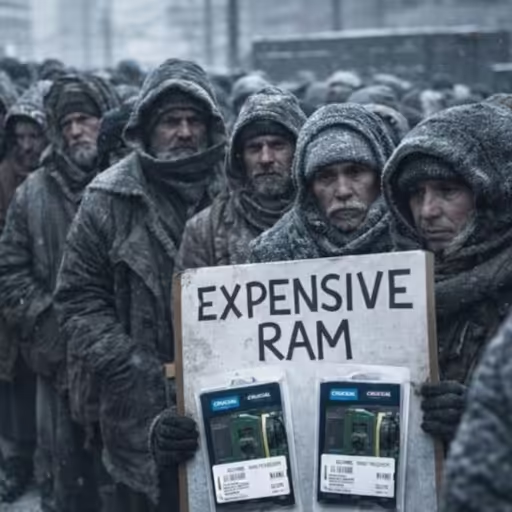
AI datacenters are eating your RAM (and Micron is even killing Crucial)
If you’ve been wondering why “normal person” RAM suddenly feels like a luxury good, the boring-but-true answer is: datacenters and AI are outbidding you.
Modern AI infrastructure doesn’t just need a lot of memory — it needs specific kinds of memory, and it needs them in huge volume:
- HBM (High Bandwidth Memory) stacked next to GPUs/AI accelerators is the current crown jewel. It’s the stuff that keeps large models fed at ridiculous bandwidths.
- AI servers also use lots of DDR5 (server DIMMs) for the CPU side, plus plenty of NAND/SSD capacity for datasets, checkpoints, and hot storage.
The nasty part is that HBM competes for the same underlying manufacturing capacity (wafers, advanced packaging, and engineering focus) that could otherwise be making more “boring” consumer DRAM and NAND. Some reporting notes HBM can consume around ~3x the wafer capacity per gigabyte compared to DDR5, which makes the tradeoff even more brutal: every time manufacturers ramp HBM, something else gets squeezed.
IDC’s framing is basically “this isn’t just a normal cycle” — it’s a strategic reallocation of silicon capacity toward AI/datacenter-grade memory and storage, with consumer devices getting the leftovers.
Micron exiting Crucial: the clearest “tell” that the squeeze is real
Micron (one of the big three memory suppliers) made it official: it’s exiting the Crucial consumer business — the brand many PC builders associate with “reasonable, mainstream” RAM and SSDs.
Micron’s press release is unusually blunt about the motive: AI-driven datacenter growth is driving a surge in demand for memory and storage, and Micron is choosing to redirect supply and support toward “larger, strategic customers in faster-growing segments.”
Key details from Micron:
- They’re exiting the consumer Crucial business and stopping Crucial consumer shipments by the end of fiscal Q2 (February 2026).
- They say they’ll continue warranty service and support for Crucial products during/after the transition.
Reuters’ reporting lines up: Micron is pivoting away from consumer Crucial to focus on higher-margin memory (including HBM) for AI/datacenters.
This is the part that should make consumers nervous: it’s not just “prices are high this month.” It’s a major supplier openly saying, “We’d rather sell memory to AI and enterprise customers than to you.”
How this trickles down into prices (even if you don’t buy RAM)
When memory prices spike or supply tightens, OEMs don’t always slap a bigger price tag on the box. They often get sneakier:
- Same laptop price, but less RAM (or slower storage).
- Configurations you actually want are harder to find.
- “Reasonable” specs get pushed into higher-priced tiers.
That’s why the RAM crunch can raise the effective price of everything: laptops, desktops, and phones either get more expensive or get worse for the money. IDC is already warning that memory constraints can push up pricing and force spec tradeoffs in 2026 device markets.
Retail vs. used: why pricing looks completely insane online
One confusing thing: “RAM prices are spiking” doesn’t always show up the same way everywhere.
- Retail / marketplace listings can go full clown mode (out-of-stock + third-party sellers + panic pricing).
- Used / open-box prices sometimes lag behind, until the shortage drags long enough that buyers can’t find retail inventory and start paying up for used parts.
That mismatch is exactly why someone can look at Newegg/BestBuy marketplace pricing and say “prices doubled,” while eBay sold prices don’t always move in lockstep.
Will phones and laptops get more expensive soon?
“Soon” is hard to promise. But the general direction is plausible:
- If DRAM/NAND remain constrained and pricey, OEMs either raise prices or reduce specs.
- Even if sticker prices don’t jump overnight, value can drop (same price, worse config).
If you already bought your tech recently at decent prices, you may have timed it well. If you’re planning upgrades, it might be smarter to buy based on actual need, not panic—because memory is famously cyclical and “shortage narratives” don’t always play out cleanly.
The scalper question: was my buyer a bot?
Could someone build a scraper + auto-buy system? Technically, parts of that are easy (alerts, price tracking). Fully automated checkout is where it gets messy: anti-bot systems, CAPTCHAs, account risk, and often ToS problems.
In practice, most “scalpers” don’t need bots. They do something simpler and more effective:
- Saved searches (exact part numbers / keywords)
- Instant notifications
- Fast purchase on anything under their threshold
That’s likely enough to explain why my listing vanished immediately.
What I’d do differently next time (if I wanted to maximize price)
If you want “sell fast,” price in the obvious buy zone and ship clean.
If you want “maximize dollars,” a smarter approach is:
- List higher (example: $129.95)
- Enable Best Offer
- Auto-decline lowballs
- Step down every 48—72 hours until it moves
That method captures the high-paying urgent buyer without getting stuck forever.
Macro Economic Forecast for RAM
The macro story is: memory is becoming a bottleneck input again, and that can push up prices (or push down specs) for PCs, phones, and consoles—especially through 2026.
What the decent sources are saying right now:
- PCs: IDC is warning average PC prices could rise up to ~8% in 2026 due to DRAM/NAND shortages, and some OEMs are talking about bigger hikes (up to ~15%) depending on SKU and availability. (Tom’s Hardware)
- Consoles / broader electronics: Reuters is reporting console makers are getting squeezed because memory makers are prioritizing higher-margin datacenter demand; it mentions downstream price hikes and even notes Micron pulling its Crucial consumer brand in this context. (Reuters)
- Underlying cause: IDC’s own writeup basically says AI/datacenter demand is reallocating capacity (HBM + high-cap DDR5) away from consumer memory, with 2026 supply growth below historical norms. (IDC)
- Phones: Counterpoint is flagging smartphone bill-of-material increases from DRAM price surges and expects more pressure into 2026 (meaning OEMs either raise prices or cheap out on configs). (Counterpoint Research)
- Pricing catalyst: multiple reports claim Samsung has doubled DDR5 contract prices amid “no stock” conditions—exact numbers vary by report, but the direction is consistent. (Tom’s Guide)
So yes: it’s likely a worse buyer market for mainstream tech in 2026, and it might stay annoying longer if the AI buildout keeps eating capacity. But I wouldn’t confidently say “everything goes up for years” because DRAM is famously cyclical, and some analysts expect this boom to eventually cool and reverse. (The Register)
Apple “didn’t raise RAM upgrade prices”
As a result, people are joking that Apple’s RAM prices make sense now.
Two things can be true at once:
- Apple’s RAM upgrades have been wildly overpriced for years (price discrimination + non-upgradable unified memory = they can charge what the market will bear).
- A shortage can make their already-high upgrade fees look “less insane” by comparison—not because Apple predicted anything, but because they already priced at “maximum margin” and have supply leverage/long-term deals that buffer them. IDC explicitly calls out Apple (and Samsung) as more structurally hedged via cash + long-term supply agreements. (IDC)
Is RAM now the most expensive desktop component after GPUs?
Sometimes, yes—especially if you’re talking high-capacity DDR5 kits in this market. But it’s not universally true: a lot of builds still have GPU >> CPU and then RAM/SSD swapping places depending on capacity and current pricing. The bigger point is correct: RAM has moved from “minor line item” to “painful line item.”
If you already bought your gear recently at sane prices, you probably timed it well. Just don’t assume this means every tech category stays expensive—this is mainly a memory/SSD-driven inflation story, not a universal “all electronics” doom trend.